Your question.
The right evidence.
We help you understand geological conditions, compare opportunities and decide what needs to be tested next. Each application calls for a different combination of information.
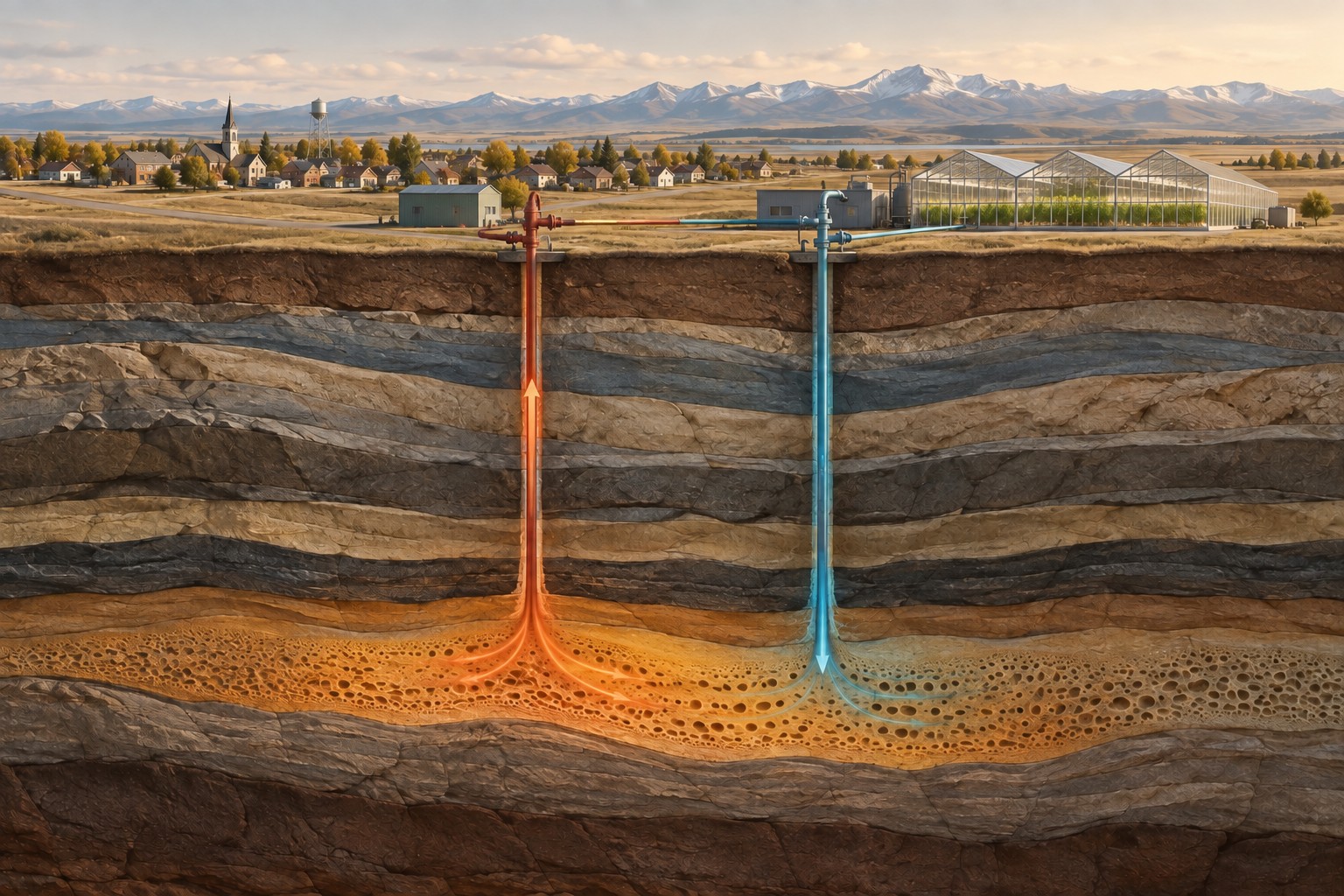
Could the ground support your energy idea?
Geothermal means using heat from within the Earth. The opportunity may be electricity, heat for buildings, industrial heat or a greenhouse. The right investigation depends on the technology and the local geology.
We bring geological maps, well records, temperature information and geophysics together to investigate the setting. Ground MT can help identify electrical contrasts associated with rock types, alteration and fluids. It helps build a geological picture; it is not a thermometer.
Questions we help explore
- Which areas deserve a closer look?
- What geological structures may influence fluids?
- Which uncertainties should be addressed before drilling?
What you receive
An opportunity map, interpreted sections, an assessment of information gaps, and a recommended investigation programme.
What still needs testing
Temperature, available flow and engineering performance need separate evidence. Conventional systems, enhanced systems and closed-loop concepts have different requirements.
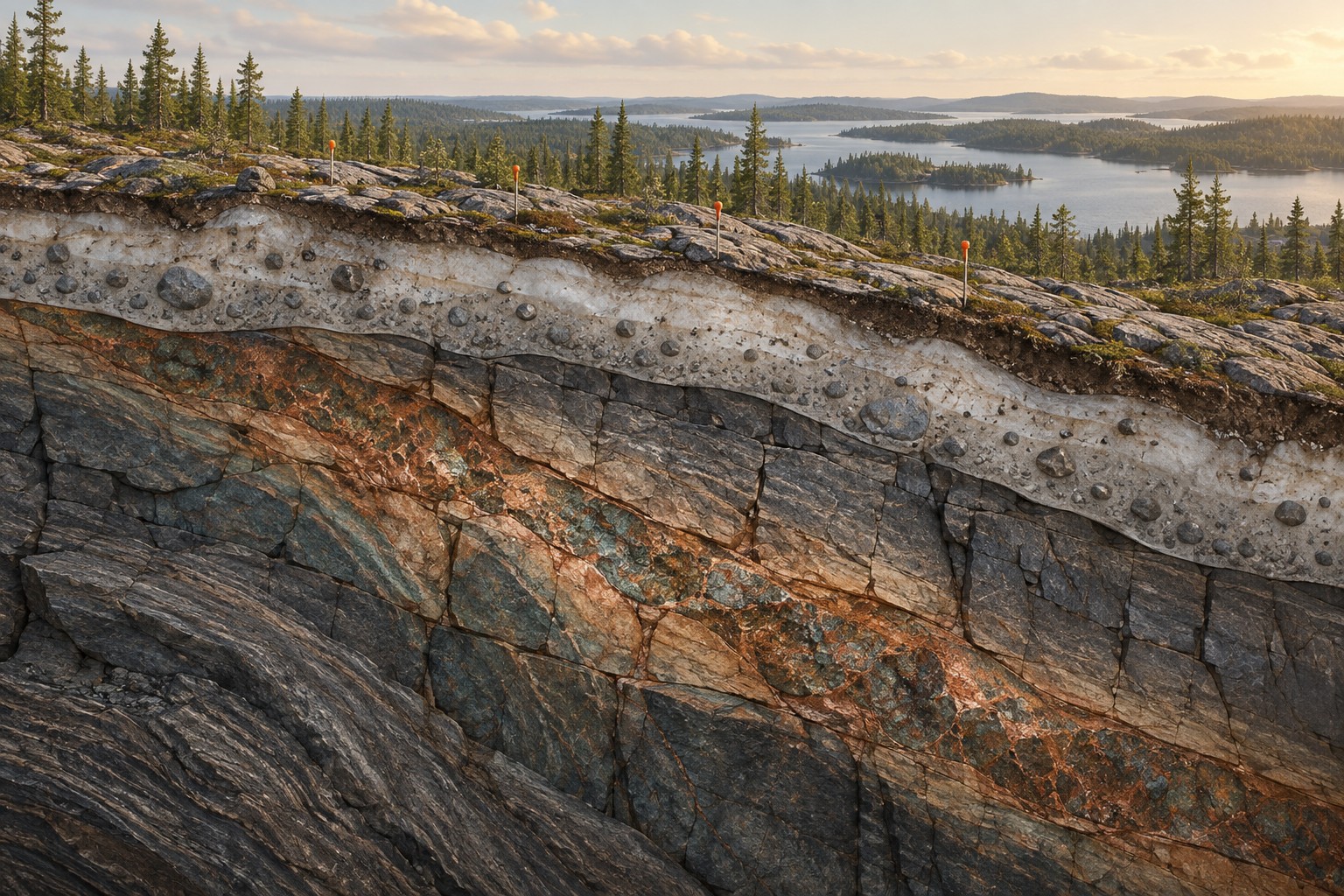
See the geological setting beneath the cover.
Soil, sediment and vegetation can hide the rocks you want to understand. Geophysics measures physical differences in the ground to help interpret structures that cannot be seen at the surface.
We compare electrical, magnetic and gravity information with geological mapping, historic surveys and drilling. The aim is to identify plausible geological explanations and prioritize follow-up.
Questions we help explore
- How might a known structure continue at depth?
- Are several datasets pointing to the same area?
- Can older surveys answer new exploration questions?
What you receive
Integrated maps, geological sections, target rationale, uncertainty, and ranked follow-up areas.
What still needs testing
An anomaly is a change in a measurement, not proof of an orebody. Drilling, sampling and geological assessment are needed to establish what is present.
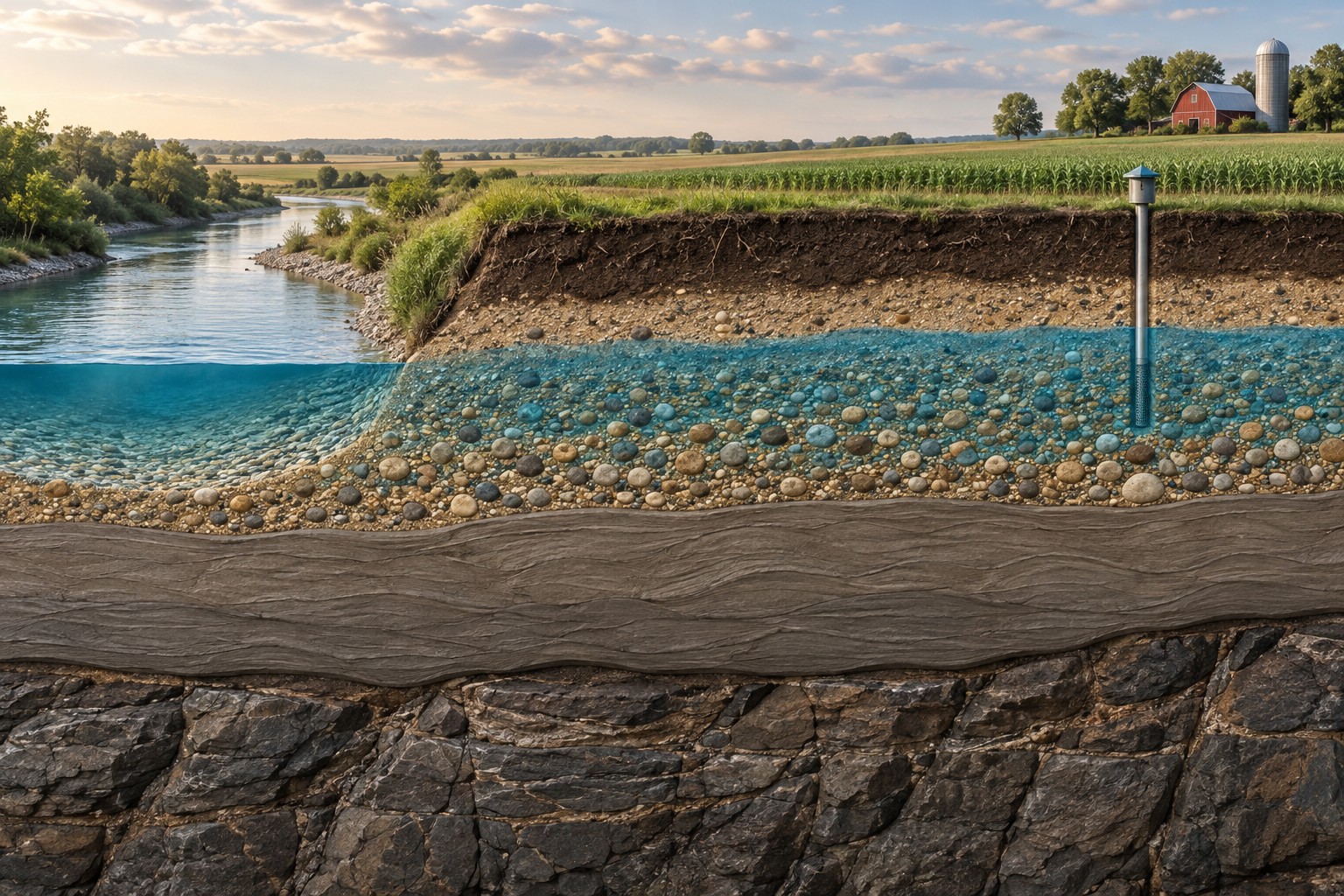
Understand the rocks and sediments that may hold water.
Groundwater usually occupies pores and fractures in rock and sediment. Understanding those formations can help guide where more detailed water investigations should take place.
We review well records and geological information, then select suitable geophysical evidence to investigate the shape and electrical properties of relevant formations. Hydrogeological specialists can add testing and resource assessment.
Questions we help explore
- Where might water-bearing formations extend?
- What information is missing before a test well?
- Could clay or saline water explain an electrical response?
What you receive
A geological screening interpretation, suggested investigation areas, limitations, and recommendations for testing.
What still needs testing
Geophysics alone cannot establish drinking-water safety, sustainable yield or a guaranteed water supply.
Connect the basin
to your project.
For energy, helium and selected brine-resource questions, the first task is often to understand the geological framework: the shape of the basin, the layers within it, and the structures that may affect fluid movement.
Dwell integrates existing seismic, well, gravity, magnetic and electrical information where available. We help identify useful datasets, test interpretations and define follow-up work. Gas composition, mineral concentration and commercial resource quality require sampling and specialist evaluation.
Make the information
useful to everyone deciding.
Communities, Indigenous organizations and development teams need more than technical figures. They need to understand the options, the unanswered questions and the consequences of the next step.
Our proposed scope begins with your priorities. We agree how information will be used and shared, explain findings in plain language and identify opportunities for local participation appropriate to the project.
For large campuses, greenhouses and energy-intensive developments, we can help scope early subsurface investigations alongside your engineering and energy partners.
Start with a question.
Leave with a direction.
Our preliminary tabletop consultation helps define the focus before you commit to a larger programme.